In this guide
- Choose your trip around your skating level
- Start with a verified park rather than an old map list
- Pick a base by transfer time and daily needs
- Compare a skate holiday with a working stay
- Pack a setup you already understand
- Plan for heat, rain and recovery
- Share the park with the local scene
- Film and photograph with permission
- Build a realistic budget without guessing local prices
- A simple first-week structure
- What to check before you leave
- Keep the trip connected to the people behind the spots
A Bali skate trip works best when you build your days around a few good sessions, short transfers and enough recovery time to enjoy the island. Start with your skating level, choose a practical base and check current park access before booking accommodation. A famous bowl on an old video does not tell you whether the venue still operates, welcomes beginners or offers the session you want.
I’m Trevor Fenner. Skateboarding is my main hobby, and Bali is part of my life as a digital nomad. Paradise Skate Mag covers the connections between skating, travel and everyday life here. This guide gives you a planning method rather than an unverified ranking of every park on the island. Venue descriptions use information published by the parks. Personal photographs are dated so an older image never stands in for a current condition report.
Your first priority is simple: arrange a trip you will enjoy at your current ability. A manageable flatground session beats spending your whole holiday watching a transition you are not ready to ride. Leave room for local advice, weather changes and the people you meet along the way.
Choose your trip around your skating level
Decide what a successful session means before choosing a neighborhood. A new skater needs smooth practice space, a controlled environment and support with basic movement. An experienced street skater usually looks for specific obstacles and enough room to work through a line. A transition skater needs useful information about bowl depth, coping, surface condition and session flow.
Write down three skills you already ride comfortably and one skill you want to improve. Use those details when contacting a park or instructor. “I’m a beginner” means different things to different people. “I push and turn on flatground, but I have never dropped into a ramp” gives a coach a clear starting point.
Ask whether your preferred practice area is available during the session you intend to attend. Shared facilities often accommodate different sports, lessons and events. A park photo shows the layout, while the park supplies the current access rules. Confirm whether lessons include equipment, whether protective gear is required and whether a reservation is needed.
Avoid treating a trip as a deadline for a difficult trick. Jet lag, heat and an unfamiliar surface add enough variables. Give yourself permission to repeat familiar basics during your first session. A relaxed start helps you understand the park and meet the people using the space.
Start with a verified park rather than an old map list
Amplitude’s own park description identifies its location in Kerobokan and describes separate street and bowl areas. Amplitude lists features including ledges, rails, banks and quarter pipes. Read the full layout description, then contact the park for current access, opening times, equipment and session arrangements.
Those details make Amplitude a useful research starting point, especially for travelers comparing street practice with transition. They do not establish the best park for every visitor. Skill level, current conditions, instruction needs and the session schedule matter more than a broad “best skatepark” label.
Amplitude also publishes a skate school page. Use the current contact details on the official website to ask about instruction. Explain your ability, age group where relevant, preferred date and the skills you want to work on. Request the current price and cancellation terms directly rather than relying on an old travel article.
Bali’s skate history also includes venues such as Pretty Poison. Motion’s Pretty Poison project page documents a backyard bowl project in Canggu dated December 2015. The construction record supports the venue’s place in local skate history. The record alone does not verify today’s opening status, location, age restrictions or event schedule. Check those details with the venue before making a journey.
Keep a short list of confirmed options rather than collecting dozens of pins. For each venue, record the date you checked, the official contact and the reply. A reliable plan with two confirmed sessions is more useful than a long itinerary built around inactive listings.
Pick a base by transfer time and daily needs
Choose accommodation after identifying the sessions you intend to attend. A room looks close to a skatepark on a map, yet road layout, traffic and the exact entrance affect the journey. Check the actual route between the accommodation and venue, then compare the journey during the time of day you expect to travel.
Kerobokan deserves consideration if your primary session is at Amplitude. Canggu also appears in the history of Bali skate culture and attracts travelers combining skating with beach time and social activities. Neither area guarantees a quiet room, an easy commute or reliable internet. Assess the exact property rather than treating a neighborhood name as a promise.
For a short trip, I would prioritize a practical base over moving accommodation every other night. Packing, checking out and transferring consume time you intended to spend skating. A longer stay offers room for a second base after you understand your routine.
Look beyond the bedroom photos. Ask about a secure place to store your board, a dry area for wet shoes, drinking water, nighttime noise and the route from the property to the main road. If you work remotely, ask about a proper desk and recent internet performance in the room you will occupy. A communal Wi-Fi claim is weaker than room-specific evidence.
Compare a skate holiday with a working stay
| Decision | Short skate holiday | Longer working stay |
|---|---|---|
| Main constraint | Limited days and session availability | Work schedule, housing and a sustainable routine |
| Accommodation priority | Short transfers to confirmed sessions | Quiet workspace, reliable connection and practical storage |
| Session approach | Protect a few sessions without overscheduling | Repeat a manageable schedule with recovery days |
| Research priority | Current venue access and travel arrangements | Ongoing costs, work requirements and accommodation terms |
| Backup plan | One alternate activity for poor weather | A workspace and daily routine independent of skating |
A remote-work stay needs more planning than adding a laptop to a skate holiday. Check your obligations with your employer or clients before choosing working hours. Consider time zones, meeting privacy, power access and a backup connection. Keep work commitments separate from assumptions about visa permissions.
Immigration requirements depend on your nationality, purpose and circumstances. Consult the official Indonesian visa information and follow links to the immigration authority for current rules. A travel blog’s use of the phrase “digital nomad” does not establish permission to work or the correct visa category.
Pack a setup you already understand
Bring a board you know how to ride. A trip is an awkward time to change deck width, truck geometry and wheel size together. If you want to experiment, make one change before departure and ride several ordinary sessions first. Familiar equipment removes one source of uncertainty when the surroundings are new.
Inspect your deck for damage, check truck hardware and look at your wheels and bearings before packing. Bring a skate tool and a modest selection of compatible spare hardware. Keep small components together so they do not disappear into your luggage. Avoid packing an entire workshop unless your trip has a specific filming or equipment requirement.
Choose protection according to the skating you intend to do and the venue’s requirements. A helmet and appropriate pads deserve luggage space. Check the fit at home, especially if you intend to use unfamiliar protective equipment. A loose helmet sitting in a bag offers no useful preparation.
Check your airline’s current baggage policy for your exact route and fare. Confirm how the airline treats a complete skateboard and whether dimensions, checked baggage or additional charges apply. Record the airline’s published answer before departure. Staff expectations and rules vary, so a friend’s previous flight is an anecdote rather than a guarantee for yours.
Plan for heat, rain and recovery
Indonesia’s tourism ministry describes two broad seasons and identifies April to October as the typical dry season across much of Java and Bali, with November to March generally wetter. Read its weather and seasons guide, then check current local forecasts. Seasonal averages do not predict a dry session on a particular afternoon.
Leave flexibility in your booking schedule. Ask the parks about weather policies before paying for lessons or reserving a session. Do not assume a roof covers every obstacle shown in a venue’s photos. Check whether an alternative practice area is available and whether the booking transfers after rain.
Wet concrete changes traction. Stop skating when the surface becomes unsafe, and do not use a dramatic rain clip as a model for your own session. Check the landing area after showers, especially near shaded corners and drainage points. If the park staff close an area, follow their instructions.
Start with shorter sessions while you adjust to the conditions. Bring drinking water, take breaks and leave space for meals and sleep. You do not need to justify a holiday by skating through exhaustion. A tired final attempt often produces less progress than returning rested the next day.
Keep your shoes and equipment dry between sessions. Air out your bag and check bearings after wet exposure. If something feels wrong with the setup, inspect the cause before skating again. A small maintenance problem is easier to handle before a wheel stops rolling properly mid-session.
Share the park with the local scene
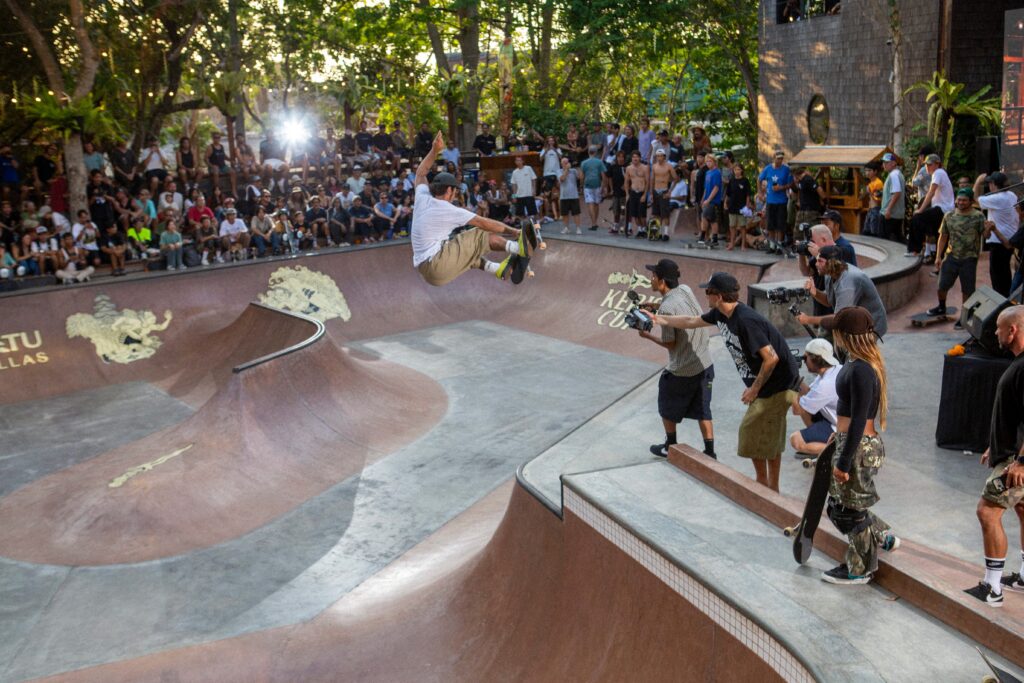
Spend a few minutes watching before entering a busy section. Look for the direction of travel, the places where riders wait and the point where one run finishes. Introduce yourself without interrupting someone preparing for a trick. A short conversation often explains the session flow faster than guessing.
Take turns and keep your board under control. Do not leave bags, tripods or drinks in landing areas. Ask before entering a line being filmed, and keep a clear escape route when a board gets away from another rider. If you are unsure whether a feature is free, wait and ask.
Respect lessons and beginner practice areas. Experienced visitors do not gain priority because they traveled farther or want a particular clip. Give newer riders room to learn without pressure. If your own level is developing, say so and choose a section where your practice fits the session.
Support the people maintaining the scene through ordinary respectful behavior. Pay required entry charges, follow posted rules and buy services you intend to use. Do not demand special access in exchange for social exposure. A publication’s interest in a venue is separate from the venue’s obligation to operate safely.
Film and photograph with permission
A skate trip produces plenty of material without turning every session into a production. Ask the skater before recording a close-up attempt, especially if you plan to publish the clip. Tell them the intended destination and ask how they want to be credited. Being visible in a public session is different from agreeing to a promotional feature.
Keep consent specific. An agreement to share a personal clip does not automatically cover a paid sponsor campaign. Obtain the relevant permission before using someone’s image in a commercial placement. For children, involve the responsible parent or guardian and follow the venue’s rules.
Keep cameras and bags outside active lines. Use a stable position with a clear view rather than chasing a moving rider across someone else’s approach. If another filmer has organized a line with a skater, speak with them before setting up in the landing area.
Save useful notes with your files: date, general location, skater credit, photographer credit and permission status. Remove unnecessary private location metadata from public uploads. Our recent skate photography carries its capture date. A photograph documents one moment and does not establish a venue’s future opening hours, access rules or condition.
Build a realistic budget without guessing local prices
Separate fixed travel costs from daily spending. Flights, checked baggage, accommodation deposits and transport bookings belong in the first group. Park entry, instruction, food, drinking water and local journeys belong in the second. Add a reserve for equipment replacement and changes to your schedule.
Request current quotes from the businesses you intend to use. Record the currency, what the price includes and whether taxes or service charges are extra. A low room rate loses its appeal if every skate session requires an expensive transfer. Compare the total routine rather than one attractive headline price.
For eligible foreign visitors, check the Bali Provincial Government’s current visitor levy information through its official channels. The government’s visitor welcome and levy notice gives the published amount and directs travelers toward the Love Bali system. Verify current requirements and exemptions for your circumstances before travel.
Do not spend your whole activity budget in advance. Leave money available for a lesson after your first session, replacement shoes or a change of transport. Flexible spending gives you room to respond to actual conditions instead of forcing the itinerary to match earlier purchases.
A simple first-week structure
Treat this as a planning example, not a booked itinerary. On arrival day, settle into the accommodation, check the board and confirm your first session. Leave ambitious skating for after sleep. Use the first park visit to understand the layout, staff guidance and session flow.
Schedule a second session after you have time to recover and adjust your equipment. If instruction fits your goals, use the first visit to identify the specific skill you want help with. Spend the next free period on an activity unrelated to skating so your trip does not depend on repeating one physical effort every day.
For a working stay, place demanding meetings and demanding skate sessions on different parts of the day. Keep at least one flexible period for weather changes or a practical errand. A remote-work routine succeeds when clients receive reliable work and you still have energy for the session you planned.
Before your final days, check baggage arrangements and pack dry equipment. Back up photographs and send promised clips to the people who agreed to receive them. Leave enough transfer time for departure instead of trying to squeeze a final distant session between checkout and the airport.
What to check before you leave
Confirm the exact accommodation address, venue entrance, current access rules and booking details. Save the official contact information somewhere available without a reliable connection. Keep your travel documents and required arrival information separate from skate-session notes so neither gets buried in a camera folder.
Review relevant insurance terms for your intended activities with the provider. Ask specific questions about recreational skateboarding, instruction, equipment and any exclusions. Do not infer coverage from a broad “adventure travel” label. Keep the insurer’s answer and emergency assistance details accessible.
Tell a trusted person your broad plans and how to reach you. Avoid posting a live accommodation location or an empty-room announcement to a public feed. Publish the skate story after the session rather than making precise personal movements part of the content.
Keep the trip connected to the people behind the spots
Bali skateboarding deserves coverage beyond a list of bowls. Local skaters, coaches, builders, independent shops, photographers and event organizers give the scene its character. Ask questions, credit contributions and distinguish what you observed from what a venue told you.
Paradise Skate Mag’s Blog will carry guides, comparisons, reviews and scene coverage across Bali skating and travel. Read About for the publication’s focus. Send factual corrections through Contact so dated information gets reviewed.
Writers and photographers with useful local knowledge should read Write for Us. Businesses seeking a disclosed editorial placement should use Sponsorship. Paid coverage receives an explicit disclosure and never buys a promised search ranking or an invented personal recommendation.

Trevor Fenner publishes Paradise Skate Mag, covering Bali skate culture, travel and island life. Skateboarding is his main hobby. His reporting distinguishes firsthand observations, original photography and researched information.